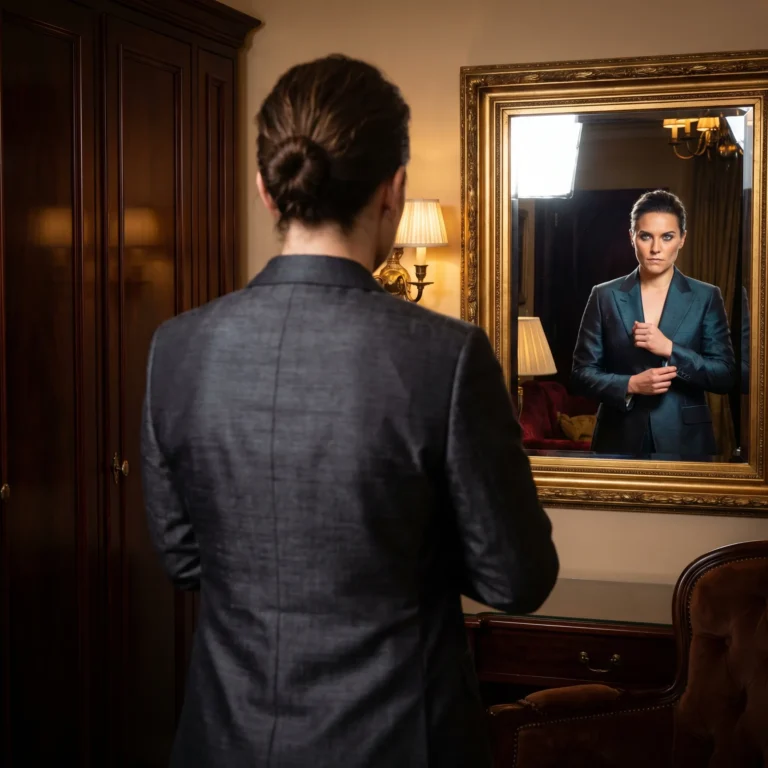
The Psychology of Dressing Well: How Clothing Shapes Cognition, Confidence, and Social Perception
Many people consider clothing to be purely cultural or aesthetic. Nonetheless, an increasing amount of psychological research shows that clothing has an impact on behaviour, self-perception, cognition, and how others react to individuals.
This phenomenon reflects deeper psychological mechanisms involving identity signalling, cognitive priming, and embodied cognition rather than just fashion trends or social expectations.
Gaining knowledge about the psychology of well-dressed people can lend insight into how clothing acts as a behavioural cue that affects interpersonal dynamics, confidence, and decision-making.
Social interactions, mental health, and professional performance are all impacted by these effects.
Clothing as a Psychological Signal
Clothing is a potent social signal that conveys information about status, identity, and competence. Humans developed in intricate social settings where cooperation and survival required quick assessments of other people. As a result, first impressions are greatly influenced by visual cues like clothing.
According to research, people frequently make snap decisions about someone’s competence, intelligence, and dependability based only on what they are wearing. According to multiple experiments, people who dress more professionally are consistently viewed as more capable and reliable than people who dress more casually. Real-world outcomes like hiring decisions, leadership perceptions, and credibility in professional settings can be impacted by these snap decisions.
Crucially, how we dress affects how we see ourselves as well as how others see us.

Enclothed Cognition: When What You Wear Changes How You Think
Adam and Galinsky (2012) introduced the idea of “enclothed cognition,” which is one of the most significant theories explaining the psychological effects of clothing. The systematic impact of clothing on psychological processes requires two things: the clothing has symbolic meaning and the wearer is physically wearing it. This is known as “enclothed cognition.”
In a series of experiments, Adam and Galinsky (2012) asked participants to wear a lab coat that was described as either a painter’s coat or a doctor’s coat. Compared to participants in the other conditions, those wearing the coat described as a “doctor’s coat” showed noticeably higher sustained attention and performed better on cognitive tasks. These results imply that clothing can activate symbolic associations that influence cognition and behavior.
Later experiments replicated this finding. For instance, Slepian et al. (2015) discovered that participants wearing formal attire felt more powerful and thought more abstractly than those wearing casual attire. Long-term planning, strategic reasoning, and leadership decision-making are all linked to abstract thinking.
All of these results suggest that clothing can prime psychological states that affect cognitive function.

Clothing and Self-Confidence
Additionally, clothing influences one’s emotional state and self-perception, which can have an impact on performance and behaviour. According to social psychology research, people frequently use self-perception theory to deduce their internal states from their own behaviour.
People may start to internalize competence or professionalism when they dress in such attire. Self-efficacy, motivation, and confidence can all rise as a result of this process.
According to empirical research, dressing formally is linked to higher self-reported feelings of psychological empowerment and authority. In a similar vein, studies on the psychological effects of clothing indicate that deliberate clothing choices can affect behavioural engagement and mood regulation.
A feedback loop is produced as a result:
Clothes → changed self-image → altered behaviour → strengthened identity.
Clothing and Social Interaction
Clothing has psychological implications that influence social interactions in addition to the individual. Interpersonal judgments, such as those regarding authority, leadership, and reliability, are heavily influenced by appearance-based cues.
According to research, those who wear formal or coordinated clothing are more likely to be viewed as leaders and are frequently given the chance to have an impact on group decisions. Perceived beauty and social credibility can also be influenced by clothing.
But context is crucial. In collaborative settings, slightly casual yet professional dress frequently creates the best impressions, even while more formal apparel may indicate authority.
These results demonstrate that appropriate attire choices are influenced by social norms in a given setting in addition to individual preferences.
Identity Expression and Authenticity
Additionally, clothing serves as a means of expressing one’s identity. Identity theory states that people want their external behaviour and internal self-concept to be consistent.
People can communicate aspects of their identities through clothing, such as:
- professional position
- membership in a group
- cultural affinities
- individual values
According to symbolic self-completion theory, people reinforce identities that are significant to them by using symbols, such as clothing. For instance, wearing attire that conveys competence and expertise may increase psychological alignment for someone who strongly identifies with their professional role.
People frequently report feeling more authentic and psychologically coherent when their clothes reflect their personal identities.
The Neuropsychology of Appearance and Behavior
Underlying brain processes connected to social perception and status assessment may also be involved in the psychological consequences of clothes.
Visual cues associated with social status activate brain areas involved in reward processing and social hierarchy evaluation, according to one neuroimaging study. The brain quickly interprets status-related signals, activating neuronal circuits involved in assessing social position and authority, as Zink et al. (2008) showed.
Clothing probably plays a role in these quick brain assessments because it is one of the most obvious markers of identity and social standing.
Clothing is more than just a surface-level aspect of appearance. Through processes like enclothed cognition, social signalling, and identity reinforcement, psychological research shows that clothing can affect cognition, emotional state, and social perception.
According to scientific research, dressing well can boost self-esteem, enhance cognitive function, and affect how others view authority and competence. Individuals can purposefully employ clothes as a tool to support well-being, professional performance, and genuine self-expression by comprehending the psychological processes underlying clothing decisions.
In this approach, clothing becomes an active ingredient in social interaction and psychological experience rather than just a reflection of identity.

Further Reading
- The Influence of Appropriateness of Dress and Gender on The Self-Perception of Occupational Attributes
- Dress, body and self: Research in the social psychology of dress
- Wearing Black Clothes: The Impact of Offenders’ and Suspects’ Clothing on Impression Formation
- THE INTERPLAY OF FASHION AND PERSONAL IDENTITY: EXPLORING HOW CLOTHING CHOICES REFLECT AND SHAPE PERSONALITY
Disclaimer:
This information is for educational purposes only and does not constitute professional medical advice. Always consult a healthcare professional before incorporating any new therapy into your practice.
Do you want to see all the updates?
👉 Follow us on Instagram and Facebook and never miss a thing!