
Photo by Richard Williams on Unsplash
A skin-prick allergy test can seem like a straightforward measurement: a tiny amount of an allergen is placed on the skin, the surface is gently pricked, and the resulting bump is measured. The larger the bump, the stronger the test appears.
Yet the skin is not a passive testing surface. It is living immune tissue that responds to signals from the nervous, endocrine, and immune systems. Research suggests that, in some people, acute psychological stress and anxiety can temporarily alter this response, occasionally making an allergen produce a larger wheal or pushing a borderline result over the threshold considered positive.
This does not mean that allergies are “caused by stress” or that an allergic reaction is imaginary. Instead, it reveals something more interesting: even an apparently objective immune test can be influenced by the physiological state of the person being tested.
What Does a Skin-Prick Test Actually Measure?
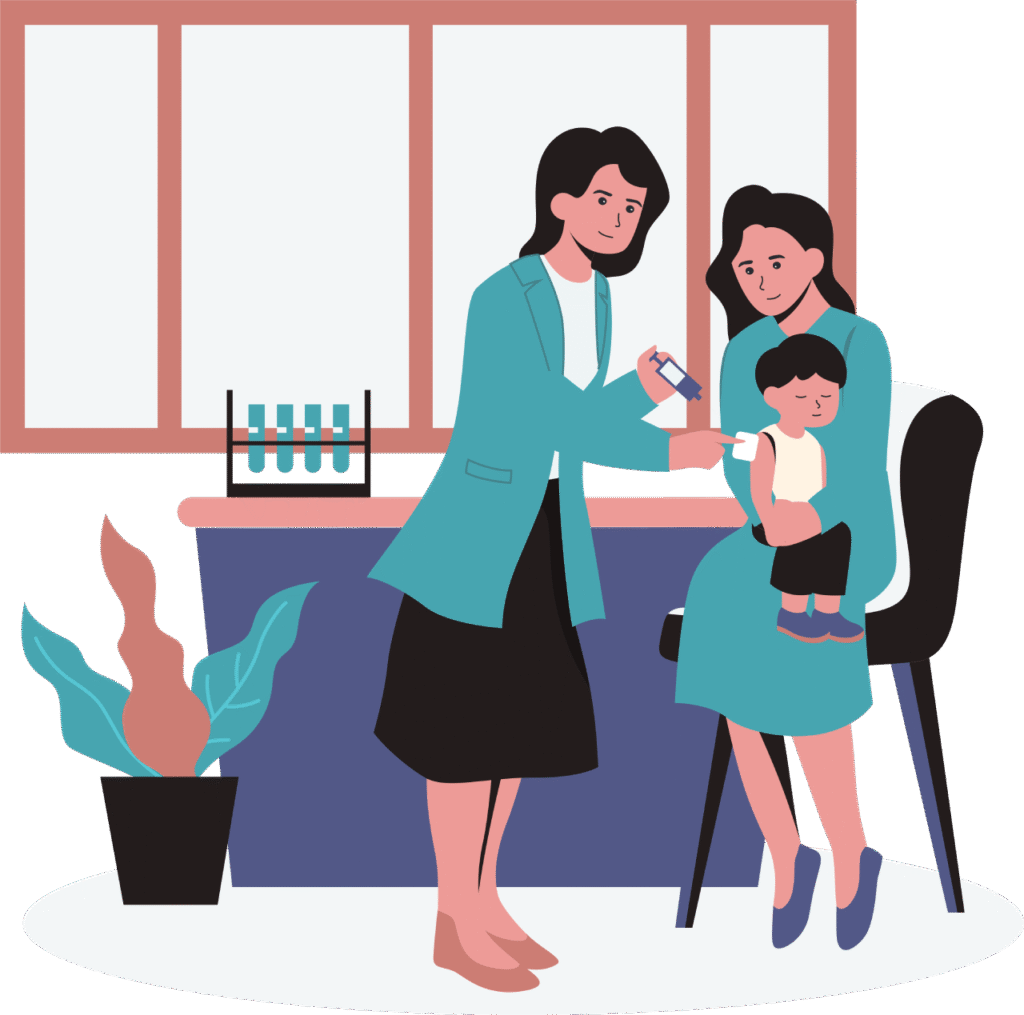
Illustration by muhammad noor ridho on Unsplash
During a skin-prick test, small amounts of suspected allergens are introduced into the superficial layers of the skin. If allergen-specific immunoglobulin E, or IgE, is attached to mast cells in that tissue, exposure can trigger the release of histamine and other inflammatory mediators.
This produces the familiar wheal-and-flare response: a raised, itchy bump surrounded by redness. The wheal is usually measured approximately 15 to 20 minutes after the allergen is applied and compared with positive and negative controls.
However, a positive skin test indicates sensitization, not necessarily a clinically meaningful allergy. In a European study involving 3,068 valid skin-test records, larger wheals were generally associated with a greater likelihood of experiencing symptoms when exposed to the allergen. However, the relationship differed considerably between allergens, and some positive tests were not accompanied by reported symptoms. This is why clinicians interpret the measurement alongside the person’s reaction history rather than treating wheal size as a diagnosis on its own.
Importantly, a larger wheal does not automatically predict that a future allergic reaction will be more severe.
What Happened When Researchers Added Stress?

One of the clearest experiments involved 28 adults with allergic rhinitis. Each participant completed two hospital laboratory visits in a crossover design, meaning that the same people experienced both the stressful and control conditions.
During one visit, participants completed a standardized social stressor involving public speaking and mental arithmetic. During the other, they completed a quiet control task. Skin-prick responses were measured before and after each condition and again the following morning.
Anxiety altered how the skin responded. As participants’ anxiety increased, allergen-induced wheals became larger following the stressor, while responses tended to decrease slightly after the control task. Anxiety also strengthened late-phase skin responses, which can develop several hours after allergen exposure. Some effects were still detectable the following morning.
The study also identified changes in inflammatory activity. Greater anxiety was associated with increased production of interleukin-6 by stimulated immune cells after the stressful condition. Although this does not establish a single mechanism, it supports the idea that psychological stress can affect immune signalling rather than merely changing how itchy or uncomfortable someone reports feeling.
Can Stress Turn a Negative Result Positive?
A later analysis examined allergens that had repeatedly produced negative or below-threshold responses in these participants.
After the laboratory stressor, the more anxious participants were more likely to develop a positive response to an allergen that had previously tested negative. The same relationship was not observed during the non-stressful condition, and stress did not significantly alter the reactions to the saline or histamine controls.
At first glance, this sounds like stress created false-positive allergies. The results were more nuanced. When the researchers compared the newly positive tests with participants’ descriptions of their real-world symptoms, many of the results appeared consistent with genuine reactions outside the laboratory. The authors therefore proposed that stress may have revealed sensitization that the earlier tests had missed—in other words, the stressed test may have corrected a previous false negative rather than producing a false positive.
This is an important distinction. Stress did not manufacture allergen-specific IgE or create a brand-new allergy in a few minutes. It appeared to modify the skin’s expression of an existing allergic tendency.
Why Might This Happen?
Acute stress activates several interconnected systems, including the sympathetic nervous system and the hypothalamic-pituitary-adrenal axis. This changes the release of hormones and signalling molecules such as adrenaline, noradrenaline, and cortisol. Immune cells and blood vessels in the skin can respond to these signals.
In the 2009 experiment, the stress task increased cortisol and epinephrine, a measurable physiological stress response. However, the precise pathway connecting that response to larger allergy-test wheals remains uncertain.
A later pilot study tested 21 people with allergic rhinitis and 19 healthy participants before and after a standardized social stress task. Researchers did not find a significant overall increase in allergen or histamine responses across the entire group. Several individuals showed substantial increases or decreases, however, and one previously unidentified sensitization became detectable after stress.
The researchers measured several possible mediators but could not identify one that explained the skin-test changes. This suggests that stress effects may depend on individual susceptibility and interactions among multiple systems rather than one universal stress hormone.
Does This Apply to Every Allergy Test?
No. The research described here concerns skin-prick testing, which measures an immediate response in living skin.
A blood test for allergen-specific IgE measures antibodies circulating in a blood sample. The skin-prick studies do not demonstrate that feeling stressed during a blood draw will similarly inflate allergen-specific IgE levels. Skin testing and blood testing assess different aspects of the allergic response, and their results do not always agree.
Food challenges, nasal provocation tests, patch tests for contact allergy, and tests for non-IgE-mediated conditions are also different procedures. Findings from skin-prick research should not automatically be applied to them.
What This Means for Patients and Practitioners
Stress is only one potential source of variation in skin testing. Medications, particularly antihistamine, testing technique, allergen extract quality, time of day, testing location on the body, skin conditions, recent illness, and individual skin reactivity can also influence results.
A stressful day does not automatically invalidate a test, and patients should not cancel or repeat testing without speaking with their healthcare provider. However, current stress and anxiety may provide useful context when a result is borderline, changes unexpectedly, or does not match the person’s history.
Practically, this means:
- A positive skin test should be interpreted alongside symptoms and exposure history.
- A larger wheal should not be treated as a direct measure of reaction severity.
- Patients should inform the clinician about medications, recent illness, previous reactions, and concerns about the procedure.
- If testing and clinical history disagree, the clinician may consider additional evaluation rather than relying on one number.
- Stress-reduction strategies may make testing more comfortable, but they are not substitutes for allergy diagnosis, prescribed treatment, allergen avoidance, or emergency medication.
The Bigger Lesson

Photo by Andréa Villiers on Unsplash
An allergy test is objective, but it is not detached from the rest of the body. Skin immune activity exists within a larger network that includes hormonal signalling, autonomic activity, inflammatory regulation, previous allergen exposure, and the person’s current physiological state.
Stress does not make an allergy unreal, and relaxation does not remove allergen-specific sensitization. What stress may do, at least in some susceptible individuals, is temporarily change how strongly that sensitization appears in the skin.
That makes the skin-prick test a useful example of a broader principle in health: measurements taken from the body are often snapshots of a dynamic system, not fixed verdicts about what the body will do in every situation.
Further Reading
- Stress-induced immunomodulation is altered in patients with atopic dermatitis
- Perceived stress predicts allergy flares
- School examinations enhance airway inflammation to antigen challenge
- Association between Perceived Stress and Rhinitis-Related Quality of Life: A Multicenter, Cross-Sectional Study
- Perceived stress and risk of adult-onset asthma and other atopic disorders: a longitudinal cohort study