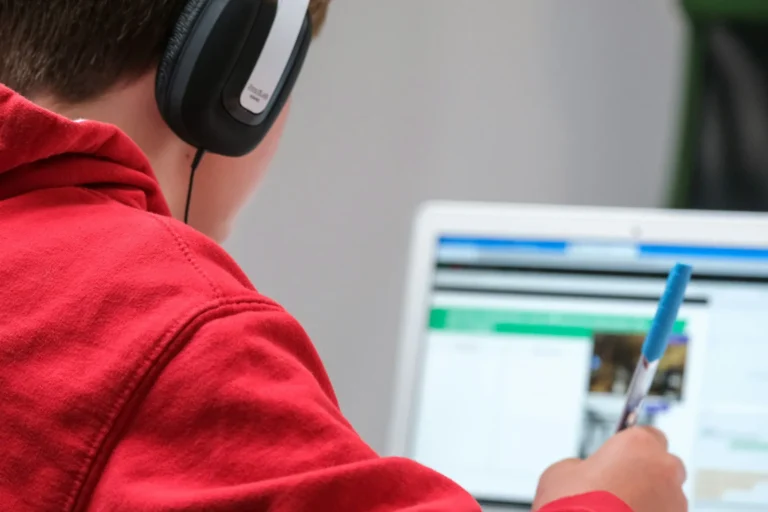
For many people, concentration seems to require quiet. A nearby conversation, humming appliance, or repetitive sound can pull attention away from the task at hand. Yet some people with attention-deficit/hyperactivity disorder (ADHD) describe the opposite experience: a completely silent room feels uncomfortable, while the steady hum of a fan, rainfall recording, or white-noise track makes it easier to begin working and remain engaged.
This does not mean that people with ADHD simply need louder environments. Speech, television, notifications, and unpredictable noises may still be highly distracting. The surprising research finding is more specific: a controlled amount of steady, meaningless sound may improve certain aspects of attention or memory for some people with ADHD.
The effect is neither universal nor fully understood. However, it challenges the assumption that the best environment for every brain is the quietest one.
Not All Background Noise Is the Same
In everyday language, “background noise” can describe almost anything happening behind a task. In research, the type of sound matters.

White noise contains sound energy across the range of audible frequencies, producing a steady hiss similar to radio static. Pink noise contains proportionally more energy at lower frequencies and often sounds softer or more balanced, like steady rain. Brown noise boosts lower frequencies even more, creating a deeper rumble.
Most ADHD research has examined white noise, with a smaller amount of research involving pink noise. Despite brown noise becoming popular on social media, there is currently little direct evidence that it improves ADHD-related attention.
These continuous sounds are also different from music, conversation, or television. Meaningful sounds compete for language processing and attention. In one study of children with ADHD, white noise increased reading speed and writing fluency, whereas classroom babble was rated as the most difficult listening condition. Accuracy did not significantly improve, showing that even a helpful sound may influence some parts of performance but not others.
What Has the Research Found?
One of the earliest influential experiments compared children with ADHD with children without the condition while they completed memory tasks in silence and with auditory white noise.
White noise improved performance in the ADHD group but impaired it in the comparison group. The same sound therefore had opposite effects depending on the children’s attentional characteristics.
Later experiments produced similar, but not identical, findings.
In a study involving 30 children between 7 and 12 years old, white noise reduced omission errors among children with ADHD during a visual Go/No-Go task. In other words, the children were less likely to miss targets. However, the noise did not improve every outcome: reaction times, response variability, and false alarms remained largely unchanged. Children with weaker vigilance and inhibitory control appeared more likely to benefit.
A 2022 pilot study compared 13 children with ADHD and 13 typically developing children during a verbal working-memory task. The children completed the task in silence, with pleasant music, and with white noise. Children with ADHD performed best with white noise and worst in silence, while the comparison group showed the opposite pattern.
Another study tested 104 preschoolers, half of whom had ADHD. During white-noise exposure, the ADHD group became better at distinguishing targets from non-targets, made fewer omission errors, and displayed less observable off-task and hyperactive behaviour. The researchers did not find the same advantages in the typically developing group.
More recently, 65 children recruited from a child psychiatric service completed a sustained-attention task both with and without white noise. Noise reduced response-time variability, particularly during the later and more demanding portions of the task. The effect was more evident among children with higher ADHD symptom levels, although noise did not produce an overall reduction in every type of error.
When researchers combined the available evidence in a 2024 systematic review and meta-analysis, they identified 13 studies involving 335 children and young adults. White or pink noise produced a small overall improvement in laboratory-task performance among participants with ADHD or elevated attention difficulties. In participants without attention difficulties, the sounds produced a small negative effect.
The pattern is encouraging, but it is not evidence that noise improves every ADHD symptom or everyday outcome. Most studies have been small, brief, and conducted in controlled settings. Much less is known about adults, prolonged use, or whether laboratory improvements consistently translate into better grades, productivity, or daily functioning.
The Brain May Need the Right Amount of Stimulation
One explanation comes from the optimal-stimulation theory. Rather than functioning best with as little stimulation as possible, the brain may perform best within an optimal range.
Too little stimulation can make it difficult to remain alert and engaged. Too much can become overwhelming and distracting. The optimal point may differ from one person to another, and it may change depending on fatigue, interest, medication, task difficulty, and sensory sensitivity.
Some models propose that people with ADHD may occasionally seek movement, novelty, sound, or stimulation as a way of regulating alertness. Under this interpretation, a steady sound may provide enough additional input to support engagement with a repetitive or low-interest task.
This does not suggest that all ADHD brains are chronically “under-aroused.” ADHD is heterogeneous, and arousal varies across people and situations. It is more accurate to view stimulation as one possible influence on attention than as a complete explanation of ADHD.
Can Noise Make a Weak Signal Easier to Detect?
A second proposed explanation involves a phenomenon called stochastic resonance.
In certain nonlinear systems, adding a moderate amount of random noise can make a weak signal easier to detect. Imagine a signal sitting just below a detection threshold. A small amount of noise may occasionally push it over that threshold, allowing the system to register information it would otherwise miss.
Researchers have proposed that sensory noise could create a comparable effect in the nervous system, improving the processing of task-relevant signals when internal activation is suboptimal. However, the relationship is expected to follow an inverted U-shaped curve:
- Too little stimulation may not be enough to change performance.
- A moderate amount may support signal detection or alertness.
- Too much may overwhelm the signal and impair performance.
Stochastic resonance is an intriguing model, but it has not been proven to be the sole mechanism behind white-noise effects in ADHD. A 2024 experiment found that pink noise improved some aspects of performance without producing the sensory-threshold changes that the researchers expected if stochastic resonance were necessary. They concluded that other mechanisms could also be involved.
Noise May Also Cover More Distracting Sounds
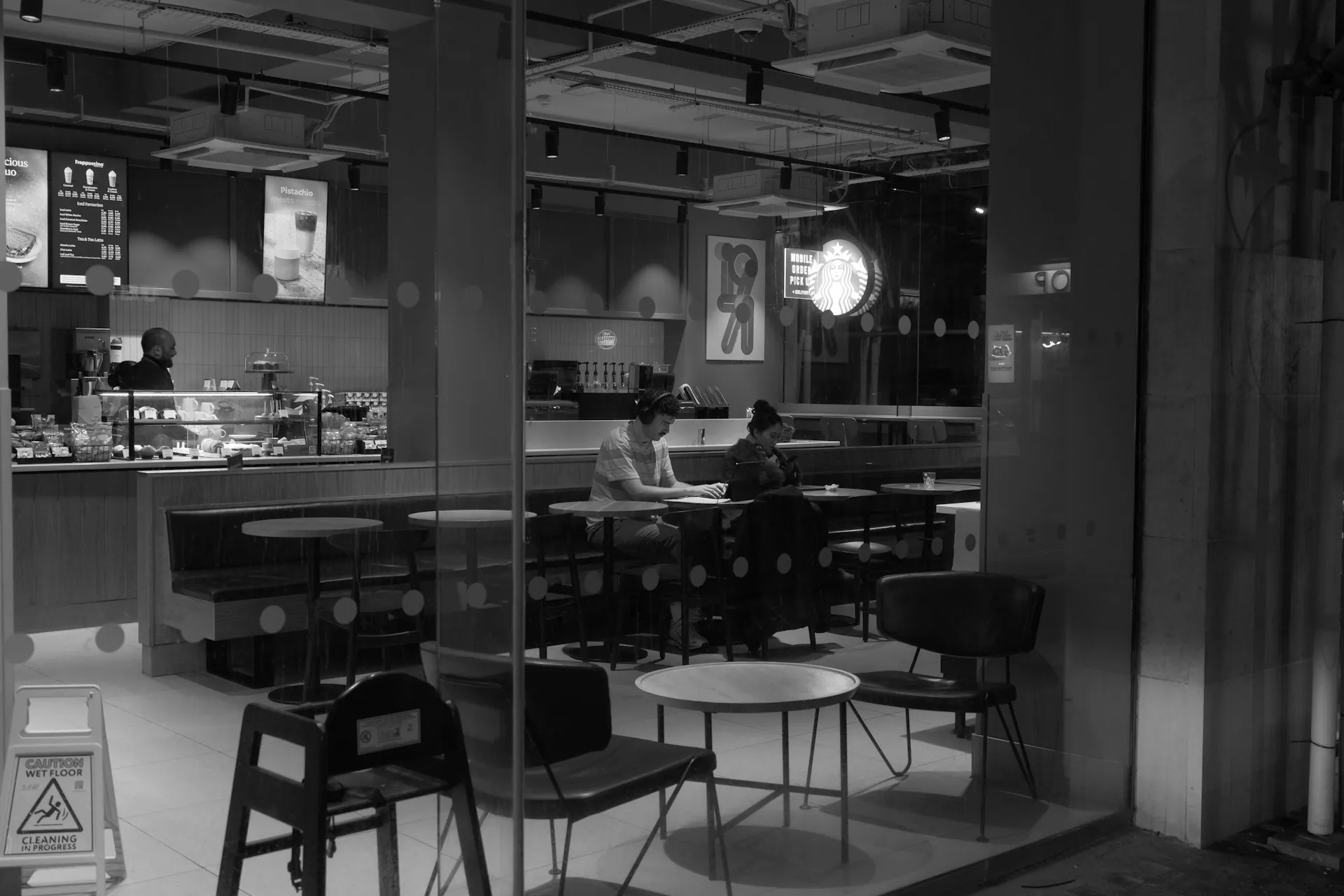
A steady sound can make sudden environmental noises less noticeable. With white noise playing quietly, the sound of a door closing, a car passing, or someone moving in the next room may stand out less sharply.
This auditory-masking explanation is simpler than stochastic resonance: the added sound may not directly improve attention but may create a more predictable sensory environment.
Predictability matters because irregular sounds repeatedly invite the brain to evaluate whether something important has happened. A continuous, meaningless sound carries less new information. It may therefore reduce the contrast between silence and unexpected interruptions.
Masking alone cannot explain every experimental finding, particularly when sound influences visual tasks, but it may contribute to the everyday experience of working better with a fan, rainfall track, or café-like hum.
Why Noise Does Not Help Everyone With ADHD
ADHD is not a single, uniform attentional profile. People differ in sensory sensitivity, symptom presentation, co-occurring conditions, medication status, sleep, anxiety, and the types of tasks they find difficult.
A 2024 study illustrates this variability. Forty-three children with clinically diagnosed ADHD completed a visuospatial working-memory task with auditory noise, visual noise, and no noise. Neither form of noise improved performance across the full group. However, children with relatively stronger inattentive traits tended to respond positively, while those with stronger hyperactive or impulsive traits tended to perform worse.
Another 2024 study involving 52 children with ADHD and 45 typically developing children found no benefit of auditory or visual white noise on eye-movement measures of inhibitory control.
Even the same person may benefit during one activity but not another. White noise might help with repetitive reading, data entry, or memorization, while it might interfere with complex writing, conversation, or learning spoken information.
A 2026 randomized-crossover study further demonstrated this task specificity. Among 26 children with specific learning disorders, with some also diagnosed with ADHD, white noise improved the speed and accuracy of reading unfamiliar letter strings but reduced accuracy on one writing measure. The mixed pattern cautions against treating a change in one cognitive skill as evidence of a broad improvement.
A Personal Experiment, Not a Universal Prescription
Because responses differ, background noise may be best treated as an environmental adjustment to test rather than a treatment to prescribe universally.

A simple experiment could involve completing the same kind of task on different days under two conditions: quiet and low-volume steady noise. The person can compare concrete outcomes such as how long it took to begin, how often attention wandered, how much work was completed, and how many errors were made.
A few principles may make this experiment more useful:
- Start with a steady, nonverbal sound rather than music with lyrics, television, or conversation.
- Keep the volume comfortable and low enough that important speech, alarms, and environmental cues remain audible.
- Test the sound during one clearly defined task rather than judging its effect across an entire day.
- Evaluate accuracy as well as speed and perceived concentration.
- Stop if the sound causes irritation, fatigue, headache, anxiety, or sensory overload.
- For children, coordinate its use with parents, teachers, and relevant healthcare professionals rather than introducing loud or continuous headphone use without supervision.
Someone who strongly dislikes white noise might prefer softer pink noise, rainfall, a fan, or quiet instrumental sound. Someone else may work best in silence. The goal is not to find the sound that is supposedly best for ADHD, but to identify whether a particular sensory environment supports a particular person and task.
Background Noise Is a Tool, Not an ADHD Treatment
The current evidence does not support replacing established ADHD care with a noise track. White-noise studies generally examine immediate performance on specific tasks, not the full range of ADHD symptoms, emotional functioning, academic outcomes, or quality of life.
Medication, behavioural interventions, educational accommodations, sleep support, and other clinician-recommended strategies have different purposes and substantially broader evidence bases. Background noise may function as a low-cost environmental support alongside these approaches, but it should not be presented as an alternative simply because it is easy to access.
The more useful conclusion is that attention is not regulated by silence alone. For some with ADHD, the right amount of predictable sensory input may make it easier to reach, and remain within, a workable level of alertness.
Sometimes the sound that appears to be a distraction may actually soften other distractions. Sometimes it may help a faint task signal stand out. And sometimes it will simply be more noise.
The difference depends on the person, the sound, the volume, and the task.
Further Reading
- Different effects of adding white noise on cognitive performance of sub-, normal and super-attentive school children
- Effects of white noise on off-task behavior and academic responding for children with ADHD
- Listening habits and subjective effects of background music in young adults with and without ADHD
- The effects of background white noise on memory performance in inattentive school children
- The effects of auditory stimulation on the arithmetic performance of children with ADHD and nondisabled children
Disclaimer:
If attention difficulties are affecting daily life, a qualified clinician can help with assessment and treatment options. This article is educational and isn’t a substitute for professional care. Thera Wellness is a wellness technology and is not intended to diagnose, treat, cure, mitigate, or prevent disease or any condition.
Do you want to see all the updates?
👉 Follow us on Instagram and Facebook and never miss a thing!