
August is technically still summer, but it often feels a little different from June or July.
Vacations start wrapping up. School schedules begin appearing on calendars. Work routines pick back up. Evenings slowly get darker. People start thinking about September before September has actually arrived.
That combination can make August feel psychologically unusual: you are still in one season while already anticipating the next.
There is not a scientific diagnosis called an “August transition effect,” but several well-established areas of research can help explain why this time of year can feel different.
Your Brain Is Already Preparing for What Comes Next
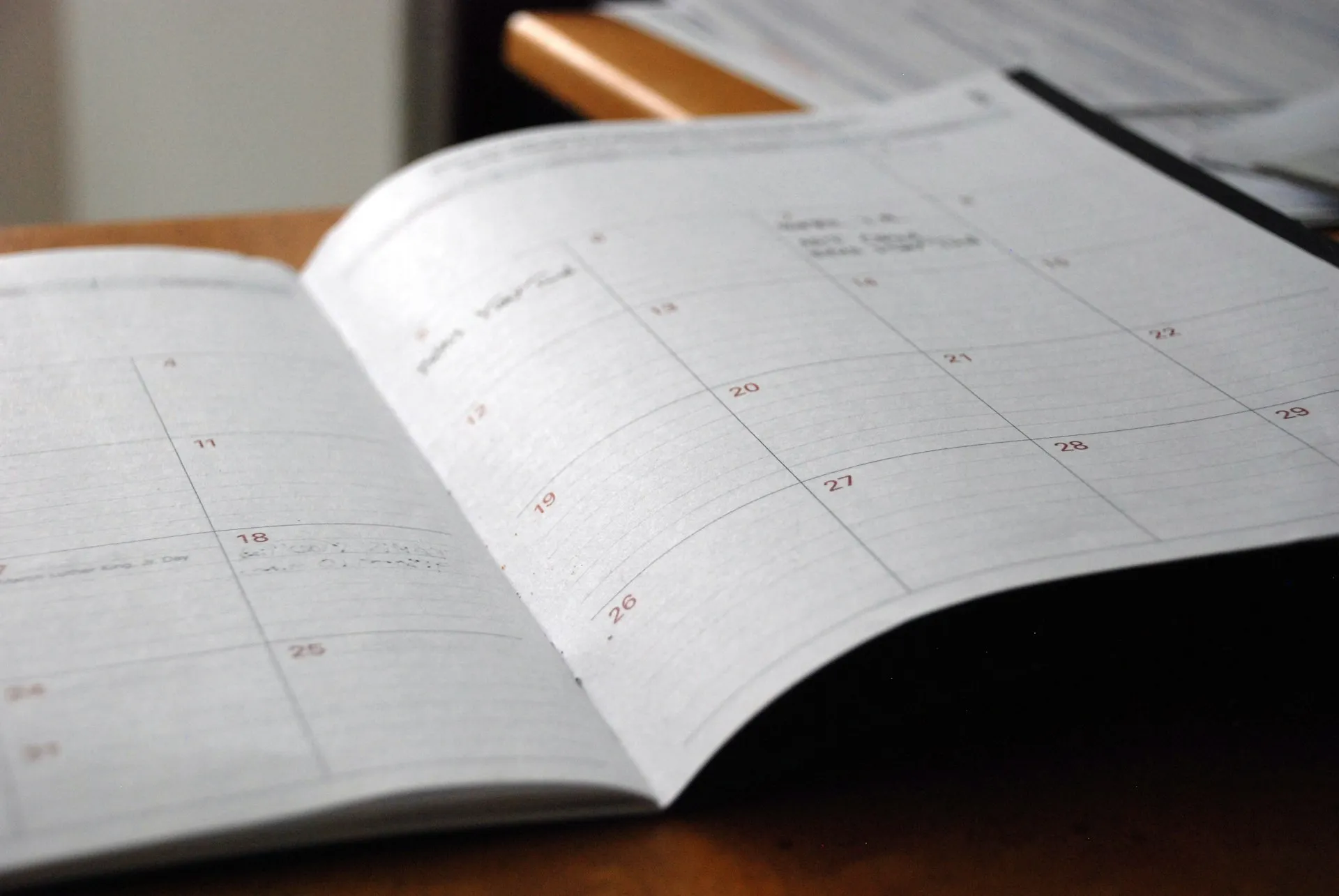
Photo by Eric Rothermel on Unsplash
Humans do not respond only to what is happening right now. Much of the brain’s activity involves anticipating what might happen next and preparing accordingly.
When September means returning to school, changing work demands, earlier mornings, new responsibilities, or a different routine, those future demands can begin occupying attention before they arrive. Anticipation can itself generate a stress response. Research on anticipatory stress shows that simply expecting a challenging event can influence psychological and physiological responses before the event occurs.
This helps explain why the final weeks of summer can sometimes feel strangely busy even when nothing particularly stressful is happening yet. You may still be sitting by the pool, but part of your brain is already organizing September.
Routines Act as Time Cues
Our bodies operate according to approximately 24-hour circadian rhythms, which regulate processes including sleep, alertness, hormone release, and body temperature.
Light is the strongest environmental signal synchronizing these rhythms, but daily behaviors matter too. Wake times, meals, exercise, school, and work all provide repeated cues about when things are supposed to happen.
Researchers sometimes describe a mismatch between biological timing and socially required schedules as social jetlag.
For example, someone who naturally sleeps from midnight until 9 a.m. throughout the summer may suddenly need to wake at 6:30 a.m. once school or work schedules resume. That change can temporarily put social obligations out of alignment with the person’s preferred biological timing.
August is often when this transition begins.
Alarm clocks return. Bedtimes start shifting. Meals move earlier. Morning routines become more structured. Even relatively small schedule changes can therefore make the end of summer feel different before the season has officially changed.

Photo by Polina Kuzovkova on Unsplash
The Light Environment Is Changing Too
There is also a physical environmental change occurring in August: daylight is gradually decreasing.
The circadian system uses light detected by the retina to help synchronize the brain’s central biological clock in the suprachiasmatic nucleus of the hypothalamus. Changes in the light–dark cycle therefore provide the nervous system with information about both time of day and season.
Importantly, this does not mean that everyone becomes depressed as summer ends.
A systematic review examining seasonality and depressive symptoms found some evidence for seasonal variation in depression but did not support the idea that entire populations simply shift toward poorer mood whenever daylight decreases.
The better interpretation is that changing daylight is one of several environmental signals the body continuously responds to.
By late August, those signals are beginning to change.
Transitions Create More Mental Work
There is another reason transition periods can feel tiring: they require adjustment.
Stable routines reduce the number of decisions we have to make.
If every weekday follows roughly the same pattern, many behaviors become automatic. You know when to wake up, when to leave, when to eat, and what comes next.
Transitions temporarily remove some of that predictability.
Suddenly you may be thinking about:
- changing sleep schedules
- returning to school or work
- appointments and activities restarting
- transportation or commuting
- new responsibilities
- unfinished summer plans
- things you wanted to accomplish before fall
None of these tasks necessarily feels overwhelming on its own. Together, however, they increase the amount of information competing for attention.
This may be one reason August can feel simultaneously slow and hectic.
There Can Be Two Conflicting Messages at Once
Late summer also creates an interesting psychological conflict.
One message says: Enjoy summer while it lasts.
The other says: Start getting ready for fall.
Those goals compete.
You may want to rest while also feeling pressure to become productive again. You might want to enjoy spontaneous summer evenings while simultaneously trying to move your bedtime earlier.
That tension is a normal feature of transitions: the routines associated with one period have not completely disappeared, while cues associated with the next period are already arriving.
August sits directly in that overlap.
Your Body Clock May Need More Time Than Your Calendar
One of the easiest mistakes to make during seasonal transitions is assuming that changing a schedule on paper means the body immediately follows.
Circadian rhythms adjust according to environmental signals, particularly the timing of light exposure. They do not simply reset because September 1 appears on the calendar.
This becomes especially noticeable when summer schedules involve later bedtimes and wake times.
Returning suddenly to an early morning schedule can create a temporary mismatch between the social clock and the biological clock. Reviews of social jetlag research describe this discrepancy as a common feature of modern life, particularly when work or school schedules force wake times earlier than someone’s natural timing.
Gradually shifting routines rather than changing everything overnight may make the transition feel less abrupt.
August Does Not Have to Mean Something Is Wrong
It is easy to interpret an unusual feeling as evidence that something is wrong.
But sometimes the environment itself is changing.
Daylight is shifting.
Schedules are shifting.
Social expectations are shifting.
Your attention is moving from what you are doing now toward what you will need to do next.
The nervous system is constantly adapting to those signals.
For some people, the result may be excitement. For others, it may be restlessness, nostalgia, fatigue, or a strange feeling that summer is already disappearing.
And for many people, it may be several of those feelings at once.

Photo by franco alva on Unsplash
The Takeaway
August occupies an unusual position between two sets of rhythms. The external environment is gradually changing while school, work, sleep, and social routines may also begin shifting toward fall schedules. Research on circadian rhythms, social jetlag, seasonal light exposure, and anticipation suggests that humans are highly responsive to both biological and social time cues. So that late-summer feeling does not necessarily come from August itself. It may come from something the brain is particularly good at doing: detecting change before the transition is complete.
Further Reading
- Envisioning the future: An ALE meta-analysis on neural correlates of future thinking, prospective memory and delay discounting. Neuroscience & Biobehavioral Reviews, 153, 105355.
- A taxonomy of prospection: Introducing an organizational framework for future-oriented cognition. Proceedings of the National Academy of Sciences, 111(52), 18414–18421
- Daytime light exposure is a strong predictor of seasonal variation in sleep and circadian timing of university students. Journal of Pineal Research, 74(2), e12843
- The effect of evening light on circadian-related outcomes: A systematic review. Sleep Medicine Reviews, 64, 101660.
*If low mood, sleep disruption, or anxiety persists well beyond the seasonal shift, it’s worth speaking with a healthcare provider.