Wellness Technology Trends 2026: The Shift From Tracking to Regulation
Medical disclaimer: This article is for general education and wellness information only. It does not provide medical advice, diagnosis, or treatment. If you have a health condition, take medication, are pregnant, or have persistent symptoms (including sleep or mental health concerns), consult a qualified clinician.
Key Takeaways:
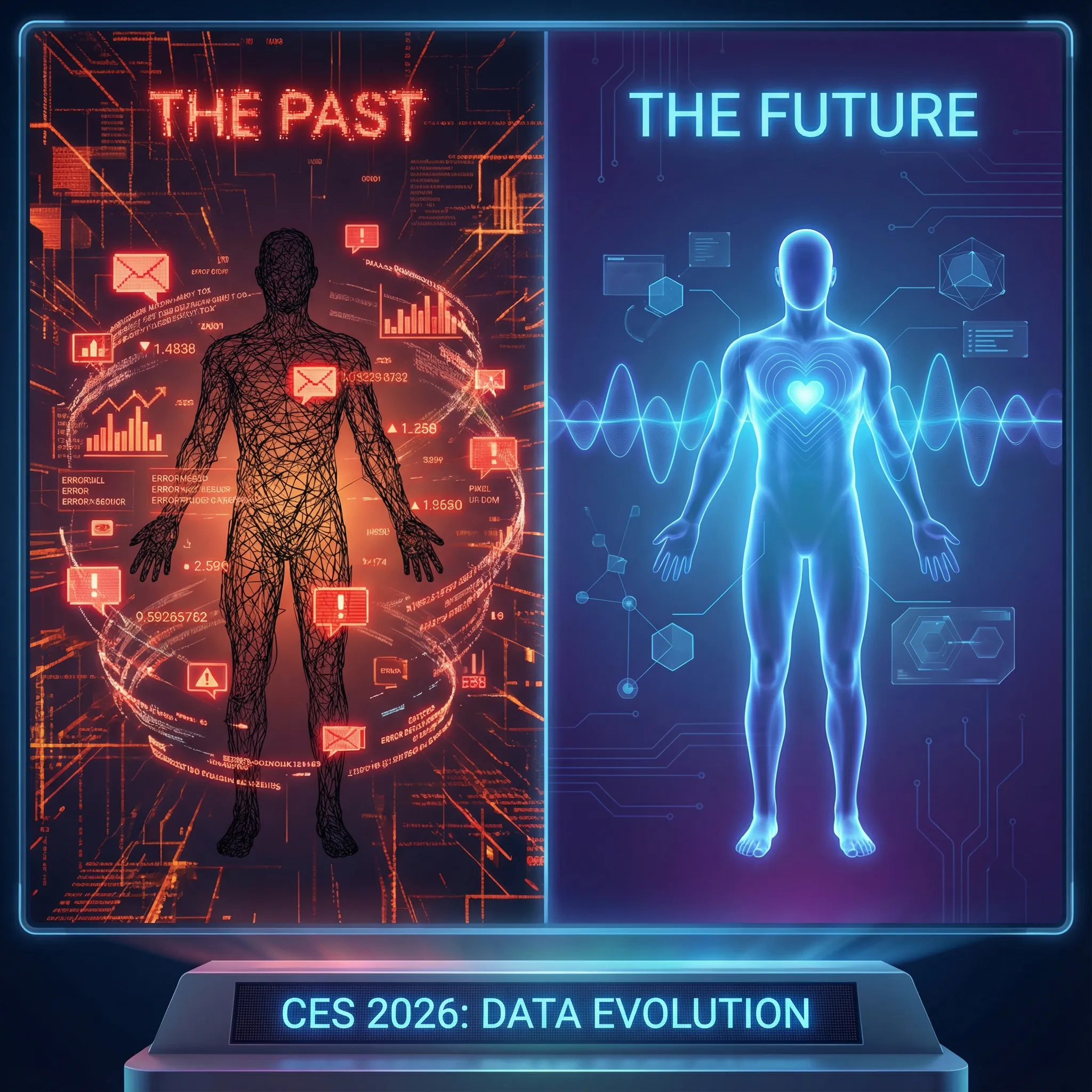
- Trend Alert: CES 2026 marks a shift from “Quantified Self” to “Regulated Self.”
- The Problem: Excessive tracking often leads to “data vigilance” and anxiety.
- The Solution: Focus on recovery capacity and stress response flexibility.
- Action: Use the “Regulation Stack” framework to evaluate new tech.
Every January, wellness technology gets its loudest moment. CES 2026 runs January 6–9 in Las Vegas CES+1, and with it comes the annual parade of “next-gen” devices promising better sleep, calmer minds, faster recovery, and more energy.
But here’s the uncomfortable truth: most wellness tech doesn’t change your health; it changes your awareness.Awareness is powerful… until it becomes a loop of constant monitoring that never converts into real resilience.
So let’s call the real shift for 2026:
The next wave of wellness isn’t more tracking. It’s better regulation.
Not a new gadget. A new goal.
What do we mean by “regulation” in wellness?
In physiology, regulation is the body’s ability to adapt to demands and then return toward balance, not by staying fixed, but by constantly adjusting. That dynamic adaptation is often discussed through concepts like homeostasis and allostasis (the body’s predictive, brain-driven adjustment to stress and environmental demands). PMC+1
Nervous system regulation is the physiological ability to adapt to stressors and return to homeostasis without getting stuck in a fight-or-flight response:
- Falling asleep without a long fight
- Recovering after a hard day instead of carrying it for a week
- Feeling energized without needing to white-knuckle caffeine
- Staying emotionally steady when life is… life
The goal isn’t to be “calm” all the time. The goal is to be adaptable.
Why tracking alone can’t get you there
Tracking is measurement. Regulation is function.
Wearables can estimate markers like heart rate and HRV, but accuracy varies by device, context, and how/when you wear it—especially for HRV outside controlled conditions. PMC+2MDPI+2
Even when your metrics are accurate, they can still create a problem:
Tracking tells you what happened. Regulation changes what happens next.
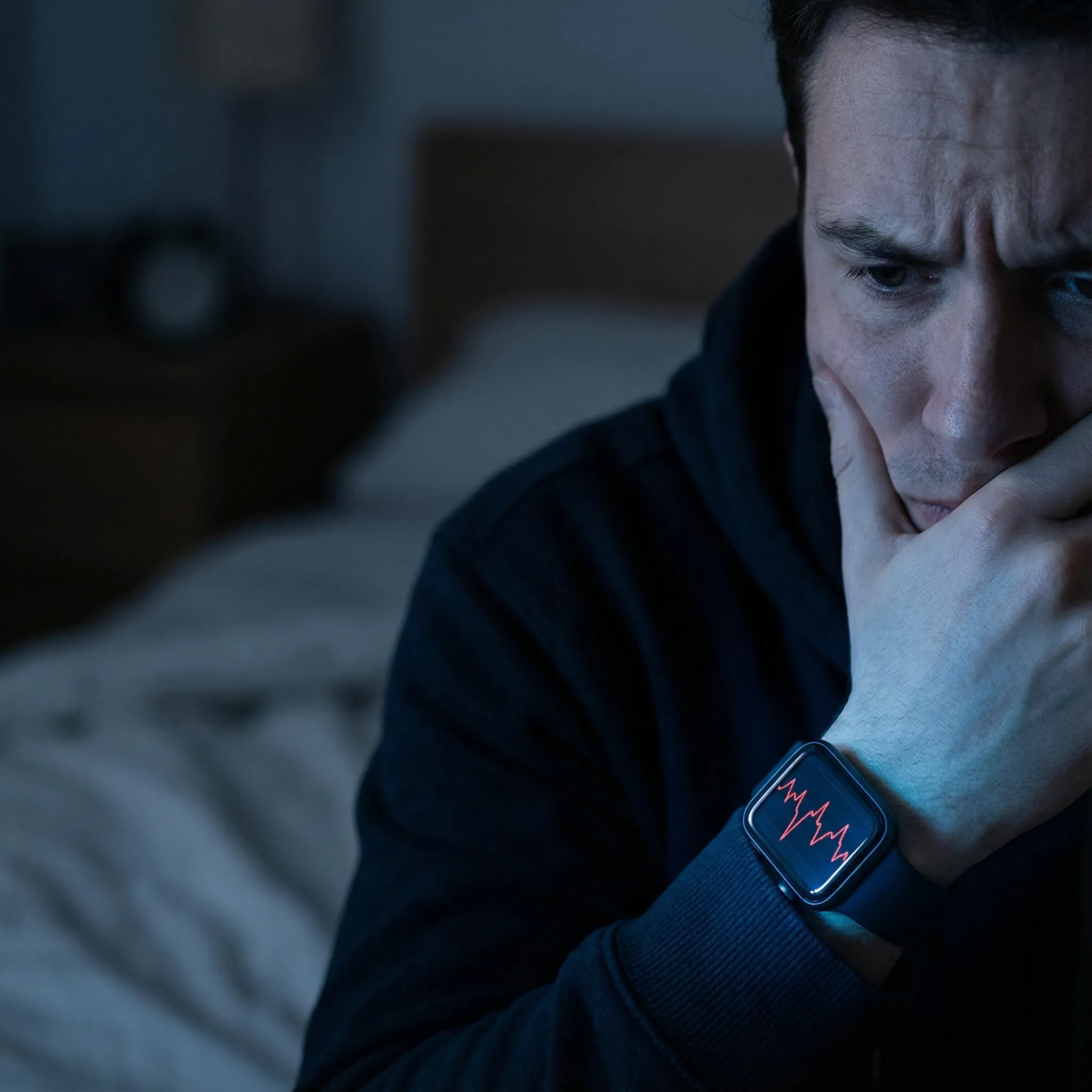
Many people now live in “data vigilance”:
- You sleep poorly → wearable confirms it → anxiety rises → sleep gets worse.
- Your HRV dips → you interpret it as failure → you push harder or spiral → recovery drops.
This is not a motivation problem. It’s a systems problem.
Tracking is a mirror. Regulation is the ability to respond to what you see without becoming it.
The 2026 thought-leadership move: “From quantified self to regulated self”
Here’s the shift we believe leaders in wellness will make in 2026:
Old model: Quantified Self
- More signals
- More dashboards
- More micro-optimizations
- More “what’s wrong with me?”
New model: Regulated Self
- Fewer but better signals
- Clear interpretation
- Simple interventions that build resilience
- More “what helps me recover?”
This is the point where wellness technology stops being a scoreboard and becomes a training environment.
What should wellness tech be optimizing for (instead of “more data”)?
If CES is about the future, here are the five outcomes that matter more than any single metric:
1) Recovery capacity
Can you bounce back after stress – sleep-wise, mood-wise, energy-wise?
2) Stress response flexibility
Do you get “stuck” in fight/flight, or can you downshift?
3) Sleep depth and continuity
Not just time in bed—how restorative your sleep is (and how quickly you recover after a bad night).
4) Energy stability
Fewer spikes/crashes across the day.
5) Signal clarity
Can you tell the difference between “tired” and “overloaded,” “hungry” and “wired,” “sad” and “burnt out”?
Wearables can support these outcomes, but only if your approach prioritizes regulation.
A practical framework: The Thera “Regulation Stack”
Use this as a simple lens for evaluating any wellness technology or routine in 2026.
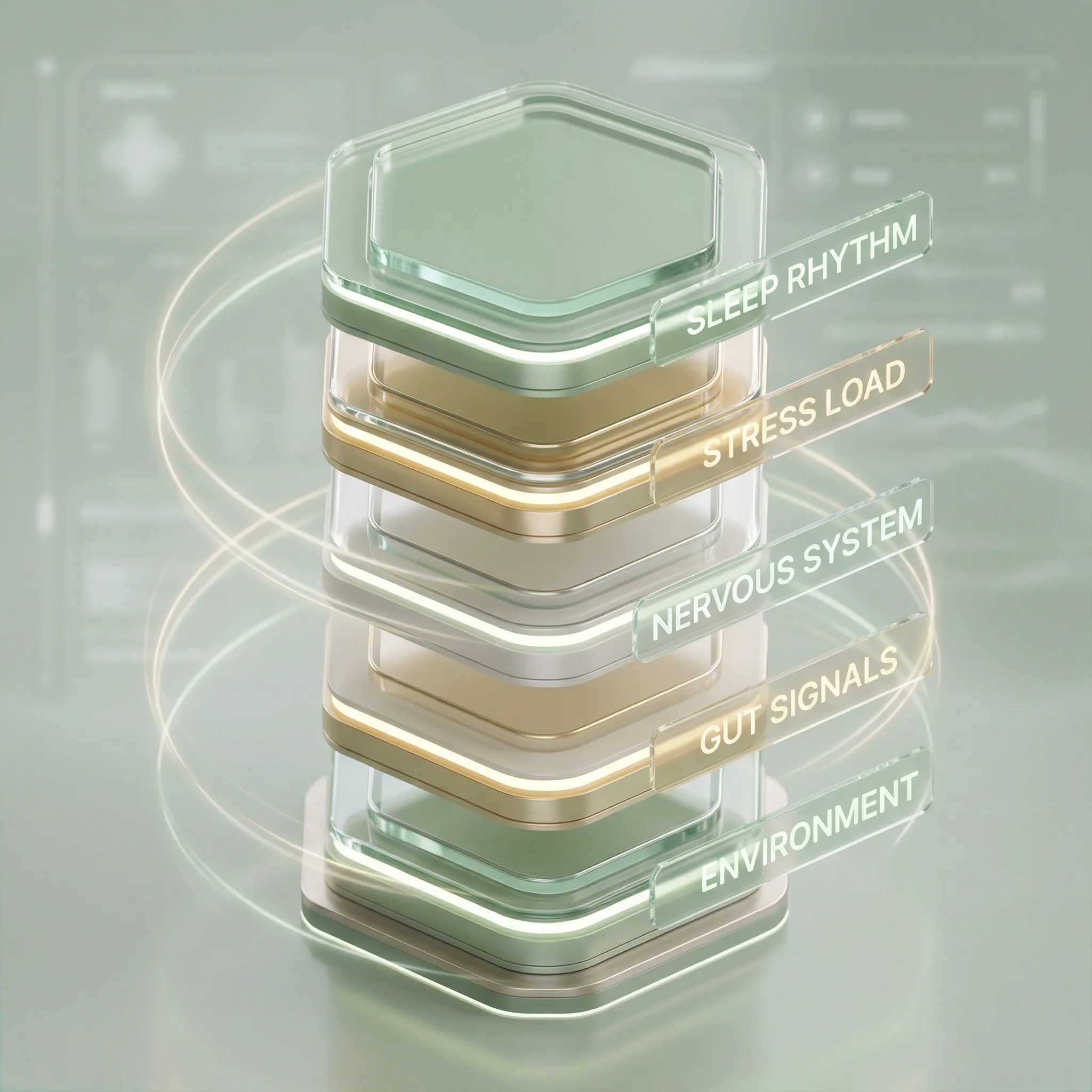
The Regulation Stack:
- Sleep Rhythm: Consistency in circadian timing.
- Stress Load: Managing allostatic load from daily demands.
- Nervous System Downshifts: Active recovery protocols.
Where Biofield Technology fits in this conversation (without hype)
Biofield-based approaches sit in a category that wellness consumers are increasingly curious about: non-pharmaceutical, regulation-oriented modalities.
The research landscape is still evolving. Systematic reviews of certain non-touch biofield therapies (e.g., Reiki, Therapeutic Touch, Healing Touch, external qigong, Johrei) have examined randomized controlled trials and typically conclude that evidence is mixed and method quality varies while also arguing the topic is worth continued investigation. PubMed
There are also reviews looking at physiological changes in practitioners during “healing states,” exploring whether reproducible markers can be identified. PubMed
What does that mean for a responsible 2026 article?
- We don’t claim biofield methods “cure” or “treat” disease.
- We do talk about biofield work as part of a broader “regulation strategy,” especially when paired with sleep, stress management, and lifestyle fundamentals.
- We stay honest: promising, interesting, not definitive.
That honesty is what earns trust.
How to use your wearable for regulation (not obsession)
Try this 7-day experiment. No new device required.
Step 1: Choose one anchor metric
Pick one of these:
- Morning resting heart rate
- Sleep duration + wake-ups
- HRV trend (not daily swings)
Because wearables vary in HR/HRV accuracy, treat your number as a trend signal, not a diagnosis. PMC+1
Step 2: Pair it with one “regulation lever”
Choose one:
- 10-minute wind-down routine
- Morning daylight exposure
- 20–30 minutes of easy movement
- A consistent sleep/wake window
Step 3: Add a “meaning check”
Each morning, write one line:
- “My body feels: ___”
- “My mind feels: ___”
- “If I had to choose one need today: ___”
This is the missing layer. Your nervous system is more than a graph.
Step 4: Evaluate outcomes, not perfection
After 7 days, ask:
- Do I recover faster?
- Is my energy more stable?
- Am I less reactive?
- Is sleep becoming easier?
If yes, you’re training regulation. If no, adjust one lever, not the whole lifestyle.
The CES question wellness brands should be asking in 2026
As CES 2026 spotlights the future of health tech CES+1, the biggest question isn’t:
“What can we measure next?”
It’s:
“What helps people become more resilient, even when life isn’t optimized?”
That’s thought leadership: shifting the target from performance to capacity.
When you should talk to a clinician
Seek professional guidance if you have:
- Persistent insomnia, panic symptoms, or depression
- Chest pain, fainting, severe fatigue, or unexplained weight loss
- Symptoms that worsen rapidly or interfere with daily functioning
Wearables can’t rule out medical causes. And wellness tools should never delay care.
FAQ
Is HRV a reliable measure of nervous system health?
HRV can reflect autonomic nervous system dynamics, but wearable HRV accuracy varies and day-to-day changes can be noisy. Use HRV as a trend and pair it with symptoms and habits. PMC+2MDPI+2
What is allostasis (and why does it matter for stress)?
Allostasis describes how the body adapts to stress through dynamic regulation, adjusting systems to meet demands. Chronic stress can drive “wear and tear” (often discussed as allostatic load). PMC+1
Are biofield therapies evidence-based?
Some systematic reviews have evaluated RCTs of non-touch biofield therapies and generally report mixed outcomes and variable study quality, while calling for more rigorous research. PubMed
What’s the simplest way to improve regulation this week?
Pick one lever (sleep schedule consistency, wind-down routine, daily movement, morning light exposure) and track one trend metric for 7 days. The win is better recovery, not perfect numbers.
Disclaimer:
This information is for educational purposes only and does not constitute professional medical advice. Always consult a healthcare professional before incorporating any new therapy into your practice.
Do you want to see all the updates?
👉 Follow us on Instagram and Facebook and never miss a thing!