
Two people can face the same deadline and experience it completely differently. One feels focused and energized. The other feels overwhelmed before they have even started.
Even within the same person, something manageable on Monday can feel almost impossible by Friday.
Why?
One explanation from stress research is surprisingly simple: stress is not determined by demands alone. It also depends on the resources we have available to meet those demands.
In other words, your nervous system may not simply be asking, *“How difficult is this?”* It may also be asking: “Do I have what I need to handle it?”
Stress Is a Relationship, Not Just an Event

Photo by Annie Spratt on Unsplash
We often talk about stress as though it exists entirely outside of us.
A deadline is stressful.
Public speaking is stressful.
A difficult conversation is stressful.
A demanding workout is stressful.
But psychological models of stress suggest the picture is more complex.
Research on cognitive appraisal suggests that our response to a situation depends partly on how we evaluate what is being asked of us and whether we believe we have sufficient resources to cope with it.
These two sides can be thought of as:
Demands → What does this situation require from me?
and
Resources → What do I have available to meet those requirements?
Resources do not necessarily mean physical objects. They can include things such as:
- time
- energy
- knowledge and experience
- physical capacity
- confidence
- perceived control
- coping skills
- social support
- access to help
When resources appear sufficient relative to the demands, a difficult situation may feel manageable, even motivating.
When the demands appear to exceed our available resources, the same situation is more likely to feel threatening or overwhelming.
This demand–resource relationship is central to the biopsychosocial model of challenge and threat. In this framework, a challenge state is more likely when a person evaluates their resources as meeting or exceeding situational demands. A threat state becomes more likely when perceived demands exceed perceived resources.
Challenge and Threat Can Begin With the Same Situation
Consider giving a presentation. For one person, the internal calculation might look something like:
Demand: I have to speak in front of 30 people.
Resources: I know the material, I practiced yesterday, I have notes, and I have done presentations before.
The presentation may still cause physiological arousal, a faster heartbeat, increased alertness, or butterflies, but the experience can feel like a challenge they are capable of meeting. Now imagine the same presentation after three nights of poor sleep, little preparation, and an unexpected change in the material.
The external task has barely changed.
But the perceived balance has.
Demand: I have to speak in front of 30 people.
Resources: I am exhausted, I do not feel prepared, and I am not sure what I am supposed to say.
Suddenly, the situation may feel much more threatening.
Experimental research supports the importance of this distinction. Turner and colleagues manipulated participants’ resource appraisals without changing the demands of the task itself. They found corresponding differences in cardiovascular patterns associated with challenge and threat states. This suggests that changing how capable someone feels to meet a demand can influence the stress response even when the actual task remains the same.
This May Explain Why Your Stress Tolerance Changes From Day to Day
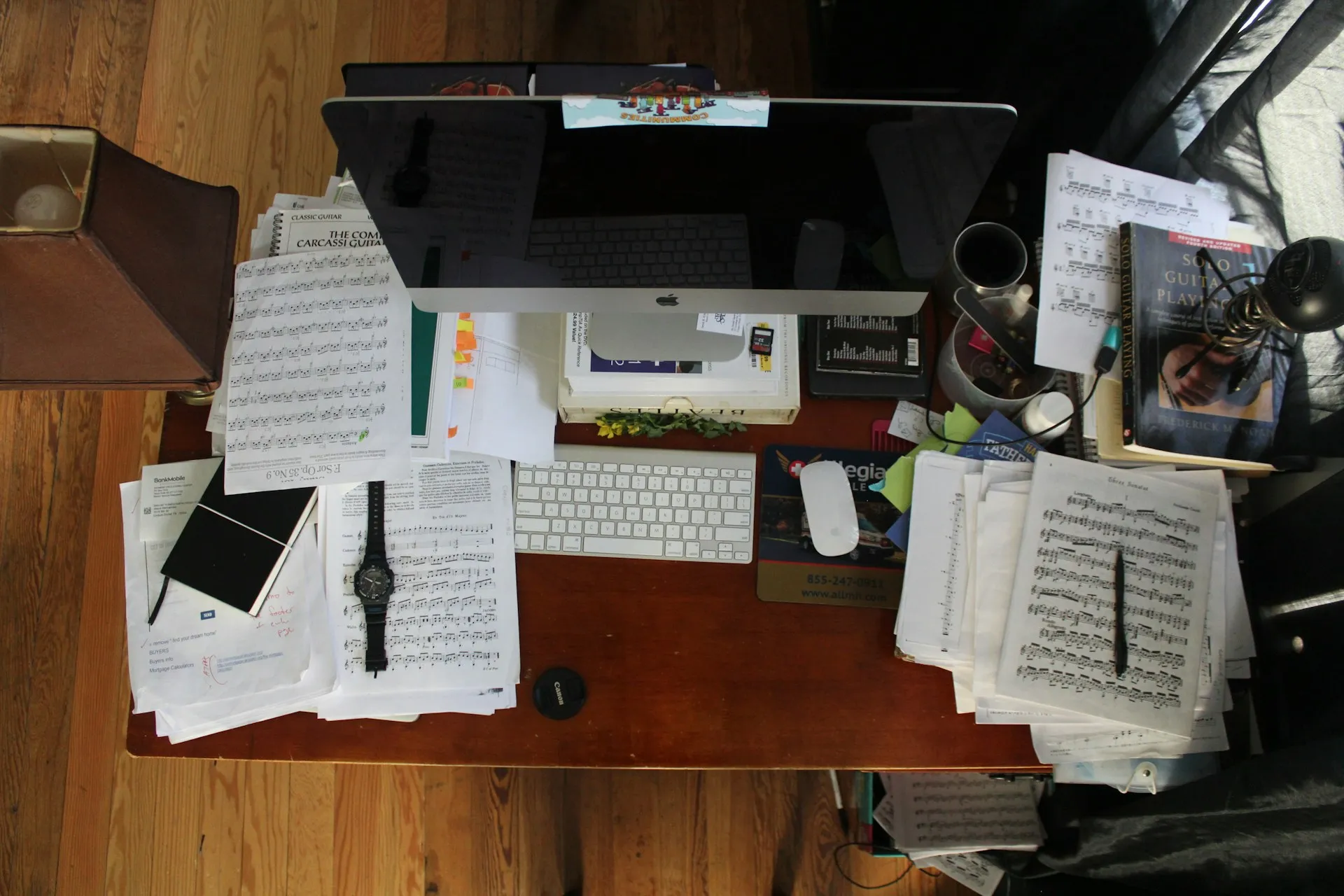
Photo by Jesus Hilario H. on Unsplash
Have you ever handled an inconvenience easily one day and felt completely overwhelmed by something equally small the next?
It does not necessarily mean you suddenly became worse at handling stress.
Your available resources may have changed.
Imagine that your normal coping capacity looks like a backpack.
Throughout the day, demands keep getting added: work responsibilities, physical discomfort, family obligations, decisions, noise, uncertainty, emotional concerns, and lack of sleep.
Eventually, even a relatively small additional demand can feel disproportionately difficult. The problem is not necessarily that the final demand was enormous. It may simply have arrived when the system was already carrying a lot.
This is consistent with broader research examining the cumulative effects of stress. Allostatic-load research, for example, examines how repeated or chronic environmental demands can produce cumulative physiological burden over time, particularly when adaptation is repeatedly required.
So when something that “shouldn’t be a big deal” suddenly feels like one, the useful question may not be:
“Why can’t I handle this?”
It may be:
“What else is my system already handling?”
Resources Can Be Internal or External
Coping resources do not all have to come from within the individual.
Researchers have identified resources, including social support, feelings of mastery, optimism, and self-esteem, as factors that can influence how people cope with stressful circumstances.
This means stress management does not always have to be about becoming mentally tougher. Sometimes the more effective strategy is changing the environment. Consider someone struggling with an enormous workload. You could tell them to become more resilient.
Or you could: reduce unnecessary tasks, extend a deadline, provide clearer instructions, divide the work among several people, or give them access to someone who can help.
The demand–resource balance changes either way.
This distinction has been studied extensively in occupational psychology through the Job Demands–Resources model.
In a foundational study, Demerouti and colleagues found that job demands were particularly related to exhaustion, while a lack of job resources was associated with disengagement. Importantly, their analyses incorporated both employees’ reports and observer ratings of workplace conditions.
Later research and meta-analytic work have continued to find that high demands are generally associated with greater burnout, while greater resources are associated with lower burnout and greater engagement.
Sometimes improving stress means reducing demands. Sometimes it means increasing resources. Often, it means doing both.
Your Appraisal May Reach Beyond How Stress Feels
The demand–resource balance may also influence what happens physiologically during acute stress.
Challenge and threat do not simply describe whether someone likes a difficult situation. Researchers have investigated whether these appraisals correspond with measurable patterns in the cardiovascular and sympathetic nervous systems.
In a 2025 laboratory study, Bigalke and colleagues measured muscle sympathetic nerve activity while participants completed a mental stress task. Participants who perceived demands as exceeding their coping resources showed greater sympathetic neural reactivity.
Other research has similarly found relationships between cognitive appraisal and subjective or physiological stress responses during demanding situations, including realistic medical simulations.
This does not mean we can simply think our way out of every stress response.
The demands people encounter can be very real.
But it does suggest that the brain’s interpretation of those demands and the resources available to deal with them are an important part of the larger stress response.
Resources Are Not Fixed
Perhaps the most useful part of this perspective is that resources can change. Imagine facing something difficult when you are: sleep-deprived, alone, uncertain about what will happen, physically exhausted, and unfamiliar with the situation.
Now imagine facing the same situation when you are: rested, prepared, supported, experienced, and able to ask for help.
The demand may be identical.
Your capacity to meet it is not.
And research suggests that people differ in their habitual tendencies to appraise stressful situations through this demand–resource lens. McLoughlin and colleagues found that individuals who tended to evaluate stressful circumstances more as threats, where demands outweighed coping resources, also tended to report poorer psychological health. The researchers emphasized that these relationships are complex and do not establish that appraisal alone causes poor health, but the findings support appraisal as an important piece of the stress process.
Instead of Only Asking “How Do I Reduce Stress?”
There is a subtle shift that can make thinking about stress more useful.
Instead of only asking: “How can I make this less stressful?” try breaking the situation into two questions.
- What are the demands?
What is currently requiring your physical, cognitive or emotional resources?
Maybe it is:
- too many tasks
- Uncertainty
- pain or physical strain
- time pressure
- interpersonal conflict
- sensory overload
- emotionally difficult information
- inadequate recovery between demanding periods
Some demands can be removed or reduced. Others cannot. That brings us to the second question.
- What resources would make this easier to handle?
Perhaps the missing resource is:
- more information
- more time
- another person’s help
- sleep or physical recovery
- breaking the task into smaller steps
- previous experience
- greater predictability
- a clearer plan
- professional support
The goal is not to convince yourself that a difficult situation is easy; it is to improve the balance between what is being asked of you and what you have available to respond.
Stress Is Not Always the Enemy

Photo by Philip Strong on Unsplash
This framework also helps explain why physiological arousal is not automatically harmful. The body mobilizes energy in response to important demands. A racing heart before competition, an exam, or a difficult conversation does not necessarily mean something is going wrong. Sometimes the body is preparing to act.
A 2025 meta-analysis including 62 studies and 7,418 participants found that challenge states were associated with slightly better performance than threat states across areas including education and sport, although the overall effects were small.
The goal, therefore, is probably not a life without stress.
A certain amount of demand is unavoidable and meaningful goals often require it.
The more useful goal may be creating enough capacity to meet those demands without remaining chronically overwhelmed by them.
The Takeaway
Stress is not simply a measure of how difficult life is. It emerges partly from the relationship between demands and resources. When resources seem sufficient, demanding circumstances may still produce arousal, but they can feel manageable or even energizing. When demands repeatedly outweigh available resources, the same nervous system activation can begin to feel overwhelming. That is why a situation you handled easily last month may feel completely different today. And it is why stress support does not always mean teaching someone another relaxation technique. Sometimes the most meaningful intervention is changing the equation.
Reduce what is being demanded. Strengthen what is available to meet it. Because when it comes to stress, the question is not only “How much am I carrying?” It is also: “What resources do I have to carry it?”
Further Reading
- Uphill M, Rossato CJL, Swain J, O’Driscoll J. (2019). Challenge and Threat: A Critical Review of the Literature and an Alternative Conceptualization. Frontiers in Psychology.
- Szkody E, Stearns M, Stanhope L, McKinney C. (2021). Stress-Buffering Role of Social Support during COVID-19. Family Process.
- Vila J. (2021). Social Support and Longevity: Meta-Analysis-Based Evidence and Psychobiological Mechanisms. Frontiers in Psychology.
- Frazier P, Meredith L, Greer C, et al. (2015). Randomized controlled trial evaluating the effectiveness of a web-based stress management program among community college students. Anxiety, Stress, & Coping.
- Nahrgang JD, Morgeson FP, Hofmann DA. (2011). Safety at work: A meta-analytic investigation of the link between job demands, job resources, burnout, engagement, and safety outcomes. Journal of Applied Psychology.