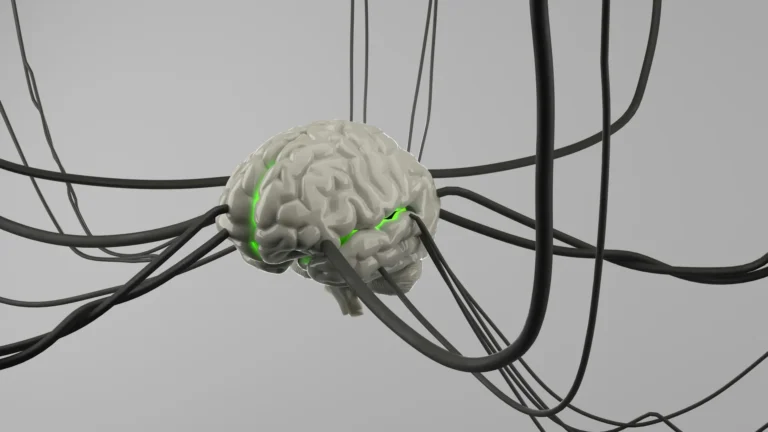
From pacemakers and cochlear implants to deep brain stimulation, electrical therapies are already transforming medicine.
Could they represent the next evolution in healthcare?
Photo by Toon Lambrechts on Unsplash
When most people think about modern medicine, they think about pharmaceuticals.
A patient develops high blood pressure and receives medication. Someone experiences chronic pain and is prescribed analgesics. Depression may be treated with antidepressants, while autoimmune diseases are often managed using medications that suppress immune activity.
For decades, chemistry has been the dominant language of medicine.
Yet the human body communicates through another language as well, one that is just as fundamental.
Electricity.
As we explored in our previous article, every heartbeat, every muscle contraction, every sensation, and every thought depends on tiny electrical signals generated by our own cells. These signals allow billions of neurons to communicate, coordinate organ function, and help maintain the body’s internal balance.
Scientists are now learning that these electrical communication networks can do more than simply keep the body functioning; they can become therapeutic targets. This idea has given rise to one of the fastest-growing areas of biomedical research: bioelectronic medicine.
Rather than relying solely on drugs or surgery, bioelectronic medicine seeks to interact directly with the body’s electrical signalling systems to restore function, reduce symptoms, and improve quality of life.
For millions of people, this future has already arrived.
What Is Bioelectronic Medicine?
Bioelectronic medicine is an interdisciplinary field that combines neuroscience, biomedical engineering, physiology, and clinical medicine to treat disease by modifying electrical activity within the nervous system.
Unlike medications, which circulate throughout the body and often influence multiple organs simultaneously, bioelectronic therapies aim to stimulate specific nerves or neural circuits involved in disease.
The goal is precision.
Instead of changing the body’s chemistry broadly, clinicians attempt to alter the electrical signals that coordinate communication between the brain, nerves, and organs. A landmark article published in Nature described this emerging field—sometimes referred to as electroceuticals—as a new therapeutic approach that may complement traditional pharmaceuticals by targeting the body’s own neural communication pathways.

Photo by Vitaly Gariev on Unsplash
The Body Already Uses Electrical Communication
Bioelectronic medicine is possible because the body is already an electrical system.
Neurons communicate through electrical impulses known as action potentials.
Specialized cardiac cells generate rhythmic electrical signals that coordinate every heartbeat.
Muscles contract only after receiving electrical stimulation from motor neurons.
Even healing tissues generate naturally occurring electrical fields that help guide cellular repair.
Rather than introducing something foreign into the body, bioelectronic medicine works by interacting with communication systems that already exist naturally.
Understanding this distinction is important.
These therapies do not “add electricity” to the body in the conventional sense—they carefully influence electrical signals that are already fundamental to human physiology.
Cardiac Pacemakers: One of Medicine’s Greatest Success Stories
Perhaps the best-known example of bioelectronic medicine is the cardiac pacemaker. The heart contains specialized pacemaker cells that naturally generate rhythmic electrical impulses. When this electrical conduction system becomes impaired, the heart may beat too slowly or irregularly, reducing blood flow throughout the body.
Implanted pacemakers restore this rhythm by delivering precisely timed electrical impulses that synchronize the heart’s contractions. Since their introduction in the late 1950s, pacemakers have improved and saved millions of lives worldwide.
Their success illustrates an important point: Using electricity to support normal physiology is not experimental; it has been part of routine medical practice for decades.
Deep Brain Stimulation: Modifying Neural Circuits
Electrical therapies are not limited to the heart. One of the most remarkable advances in neuroscience has been deep brain stimulation (DBS). In DBS, thin electrodes are implanted into carefully selected brain regions and connected to a small pulse generator placed beneath the skin.
These electrodes deliver continuous electrical stimulation that modifies abnormal patterns of neural activity associated with neurological disease.
Today, DBS is an established treatment for conditions including:
Selected cases of obsessive-compulsive disorder
Clinical trials have consistently shown improvements in motor symptoms and quality of life for appropriately selected patients.
Although scientists continue to investigate the precise mechanisms underlying DBS, its clinical success demonstrates that altering electrical communication within neural circuits can produce meaningful therapeutic benefits.
Vagus Nerve Stimulation: A Bridge Between the Brain and Body
Another rapidly growing area of bioelectronic medicine focuses on the vagus nerve.
The vagus nerve is the longest cranial nerve in the body. It serves as a major communication pathway between the brain and many internal organs, including the heart, lungs, digestive tract, and immune system.
Because of its widespread influence, researchers have become increasingly interested in whether stimulating the vagus nerve can simultaneously modulate multiple physiological systems.
Vagus nerve stimulation (VNS) is currently approved for treating epilepsy and treatment-resistant depression. Researchers are also investigating its potential role in inflammatory disorders, migraine, autoimmune disease, and gastrointestinal conditions.
Although many of these applications remain experimental, they reflect an important shift in modern medicine, recognizing that the nervous system actively regulates far more than movement and sensation.
Helping the Brain Hear Again: Cochlear Implants
One of the most remarkable examples of bioelectronic medicine is the cochlear implant.
Unlike hearing aids, which amplify sound, cochlear implants bypass damaged sensory structures within the inner ear and directly stimulate the auditory nerve using electrical signals. For individuals with profound hearing loss, this technology can restore the ability to perceive speech and environmental sounds, dramatically improving communication and quality of life.
It is another powerful reminder that electricity does not simply support biological function—it can sometimes replace lost function altogether.
Spinal Cord Stimulation and Chronic Pain
Chronic pain remains one of medicine’s greatest challenges. For some patients, spinal cord stimulation offers an alternative when medications or surgery have not provided adequate relief.
Small electrodes placed near the spinal cord deliver carefully controlled electrical pulses that modify how pain signals travel toward the brain. Rather than eliminating pain by changing the body’s chemistry, spinal cord stimulation alters the electrical communication occurring within pain pathways.
Clinical studies have shown that this approach can improve pain and function for carefully selected patients with neuropathic pain and failed back surgery syndrome.
The Future of Bioelectronic Medicine
Bioelectronic medicine continues to evolve rapidly. Advances in neuroscience, biomedical engineering, artificial intelligence, and wearable technologies are enabling researchers to develop devices that are smaller, more precise, and increasingly personalized.
One particularly exciting direction is the development of closed-loop systems. Unlike traditional devices that deliver a fixed amount of electrical stimulation, closed-loop technologies continuously monitor physiological activity and automatically adjust stimulation in response to the body’s changing needs.
This adaptive approach is already under investigation for epilepsy, Parkinson’s disease, chronic pain, and other neurological disorders. By responding to real-time physiology rather than delivering identical stimulation to every patient, these systems represent an important step toward personalized bioelectronic medicine.
Final Thoughts
For generations, medicine has relied primarily on chemistry to understand and treat disease. Bioelectronic medicine introduces another perspective—one that recognizes the body as an intricate network of electrical communication.
From cardiac pacemakers and cochlear implants to deep brain stimulation and vagus nerve stimulation, therapies based on electrical signaling are already improving the lives of millions of people around the world.
As researchers continue to explore how electrical communication influences health and disease, bioelectronic medicine may become an increasingly important complement to traditional pharmaceutical and surgical approaches.
While many questions remain, one thing is already clear:
The body’s electrical language is no longer simply a topic of physiology textbooks; it is becoming an increasingly important part of modern healthcare.
Coming Next
Why Closed-Loop Medicine Could Change the Future of Personalized Healthcare
In our next article, we’ll explore how modern bioelectronic devices are moving beyond fixed electrical stimulation toward closed-loop systems that continuously respond to the body’s own physiology. We’ll examine how these technologies work, why they’re attracting attention across neuroscience and medicine, and how personalized electrical therapies may represent the next evolution in healthcare.
Disclaimer:
This information is for educational purposes only and does not constitute professional medical advice. Always consult a healthcare professional before incorporating any new therapy into your practice. Thera Wellness is a wellness technology and is not intended to diagnose, treat, cure, mitigate, or prevent disease or any condition.
Do you want to see all the updates?
👉 Follow us on Instagram and Facebook and never miss a thing!