
Many people expect stress to show up first as worry, panic, or emotional overwhelm. But for a lot of people, the gut reacts before the mind fully catches up. The first signs may be bloating, nausea, appetite changes, constipation, urgency, reflux, or a stomach that suddenly feels unpredictable.
That pattern is not imaginary or “just in your head.” The digestive system is deeply connected to the nervous system, immune signaling, hormones, and the gut microbiome, which is why it often reflects strain quickly.

Photo by Sasun Bughdaryan on Unsplash
The Brain-Gut-Microbiome Axis: A Two-Way Street
One reason for digestion’s hypersensitivity is that the gut is part of a constant two-way communication network with the brain. This is often called the gut-brain axis, though many researchers now use the broader term brain-gut-microbiome axis because the microbiome is also an active part of the conversation.
Signals travel through neural pathways, such as the vagus nerve, hormones and stress mediators, and immune and microbial metabolites. In other words, the gut is not a passive tube processing food. It is a responsive, highly regulated system that reacts to the body’s overall state.
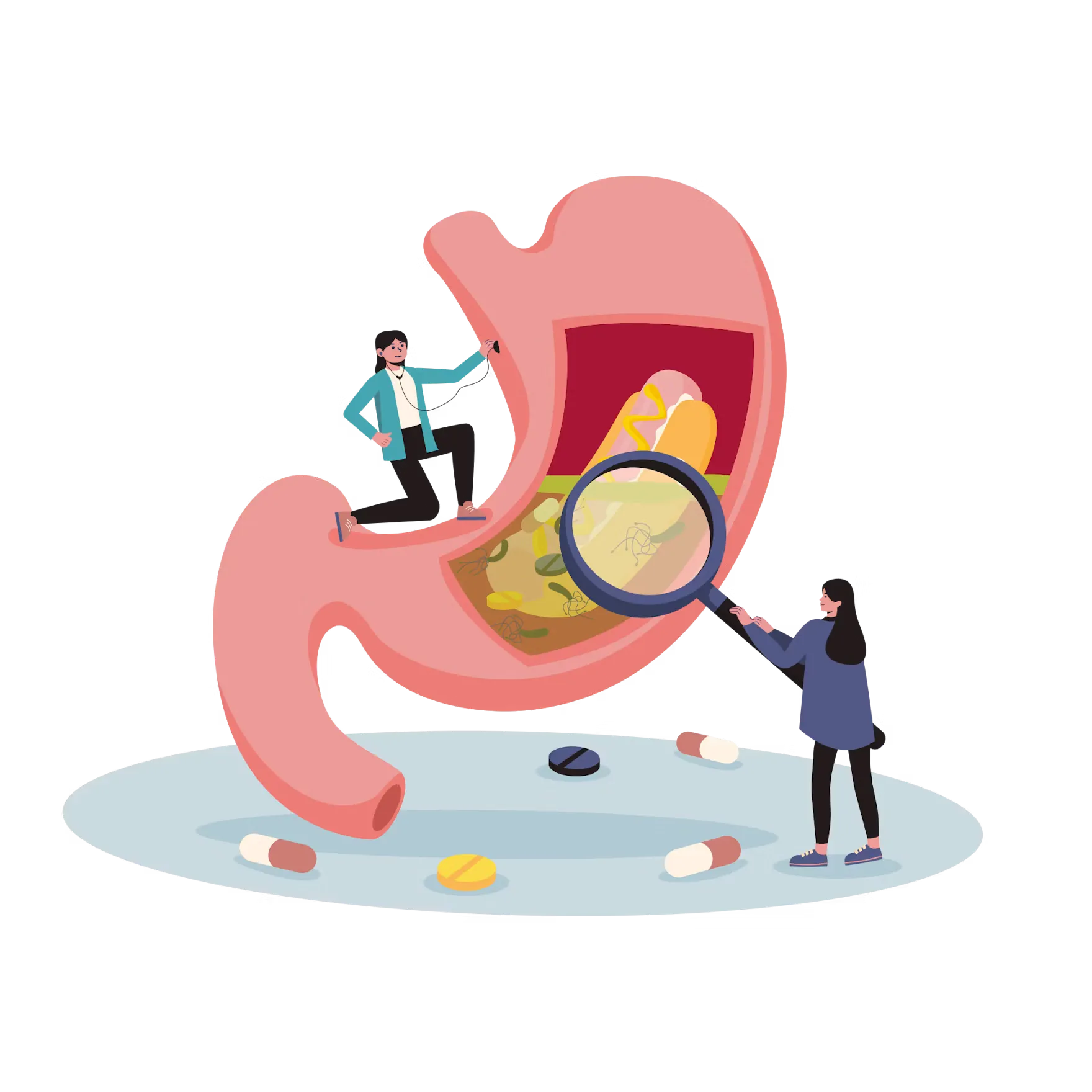
Illustration by muhammad noor ridho on Unsplash
How Stress Directly Alters Your Digestive System
When the body is under strain, digestion can change in several ways at once. Stress can alter gut motility, which helps explain why some people become constipated while others experience diarrhea or urgency. It can increase visceral sensitivity, making normal digestive sensations feel uncomfortable or painful.
It can also impair the gut barrier and contribute to increased intestinal permeability, which may amplify inflammation and symptom sensitivity. These are some of the main reasons stress-related digestive issues can feel so varied from person to person.

Photo by Sasun Bughdaryan on Unsplash
This is particularly relevant for disorders of gut-brain interaction, such as irritable bowel syndrome. In these conditions, the problem is not simply structural damage that shows up clearly on routine testing.
Instead, symptoms are shaped by altered communication between the gut and brain, changes in motility, heightened sensitivity, immune activity, and microbiome-related factors.
Stress does not “cause” every digestive problem, but it can worsen symptom severity and make an already sensitive system more reactive.
The microbiome adds another layer to this picture. Chronic stress can shift the composition and activity of gut microbes, while can in turn influence gut barrier function, immune tone, and signaling back to the nervous system.
Not every digestive complaint can be reduced to microbiome imbalance, but the gut’s response to strain is not just mechanical. It is also biochemical and ecological, shaped by how the body and its resident microbes interact under pressure.
Beyond Food: Why Diet Isn’t Always the Whole Story
In day-to-day life, this is why digestion often becomes more fragile during periods of overload. Travel, sleep disruption, emotional stress, illness recovery, burnout, overwork, and irregular eating patterns can all affect how the gut behaves. Some people lose their appetite when stressed.
Others feel constant hunger, reflux, cramping, or post-meal bloating. The outward symptoms vary, but the underlying idea is similar: digestion is highly responsive to the body’s current regulatory state.
It is also why food is not always the whole story. People often assume that if digestion worsens, the answer must be to find the “wrong” food. Sometimes food does play a central role.
But sometimes the gut is reacting to the broader context: rushed meals, chronic hypervigilance, poor sleep, inconsistent routines, ongoing inflammation, or an unsettled nervous system. A more holistic view does not ignore diet. It simply recognizes that digestion depends on more than ingredients alone.
This is an inference from the gut-brain literature, but it is a well-supported one.
When to Seek Medical Evaluation
From a practitioner’s perspective, this changes the question.
Instead of asking only, “What is irritating the gut?” it may also be useful to ask, “What is straining the system?” Is the person sleeping poorly? Eating inconsistently? Recovering from infection? Living in chronic stress? Experiencing persistent pain or sensory overload?
When digestion is one of the first systems to suffer, it may be signaling that the body is having trouble maintaining balance more broadly.
At the same time, it is important not to overgeneralize. Digestive symptoms can reflect many causes, including infections, inflammatory conditions, medication effects, gallbladder disease, celiac disease, reflux disease, and other gastrointestinal disorders that need proper medical evaluation.
A gut-brain perspective is meant to widen the lens, not replace standard care. It is most useful when it helps explain why symptoms can flare, persist, or become more sensitive even when the picture is not purely structural.

Photo by Marek Rucinski on Unsplash
The broader takeaway is simple: digestion often suffers first because the gut is one of the body’s most responsive systems. It listens closely to the nervous system, the immune system, hormonal shifts, and the microbiome. When the body is under strain, the gut often speaks up early. Seen this way, digestive symptoms are not always just about what was eaten. Sometimes they are also a sign that the whole system is asking for a more regulating, restorative, and individualized approach.
Further Reading
For readers who want to go deeper, these are strong sources:
- Madison AA, et al. Stressed to the Core: Inflammation and Intestinal Permeability in Response to Stress.
- Verma A, et al. Gut-Brain Axis: Role of Microbiome, Metabolomics, and Stress.
- Tack J, et al. Patient-Reported Outcomes in Disorders of Gut-Brain Interaction.
- Ross FC, et al. Existing and Future Strategies to Manipulate the Gut Microbiome in the Management of Disorders of Gut-Brain Interaction.
- Hwang YK, et al. Interaction of the Vagus Nerve and Serotonin in the Gut-Brain Axis.
Disclaimer:
This information is for educational purposes only and does not constitute professional medical advice. Always consult a healthcare professional before incorporating any new therapy into your practice. Thera Wellness is a wellness technology and is not intended to diagnose, treat, cure, mitigate, or prevent disease or any condition.
Do you want to see all the updates?
👉 Follow us on Instagram and Facebook and never miss a thing!